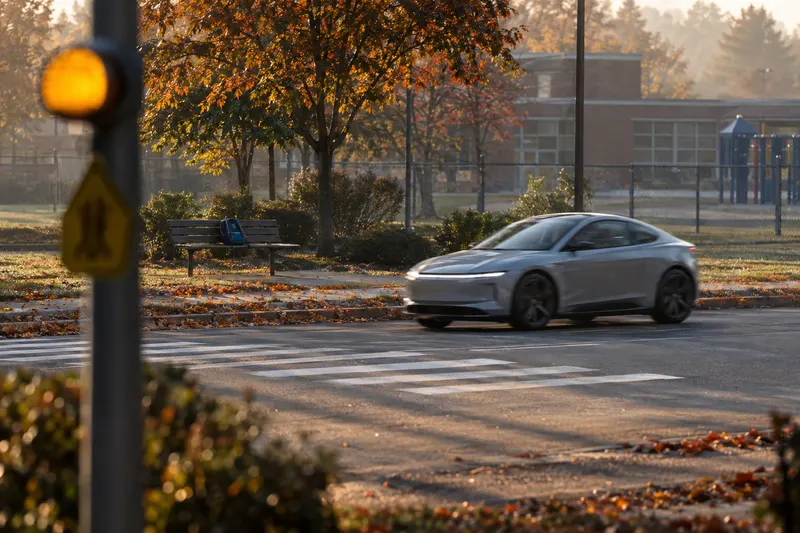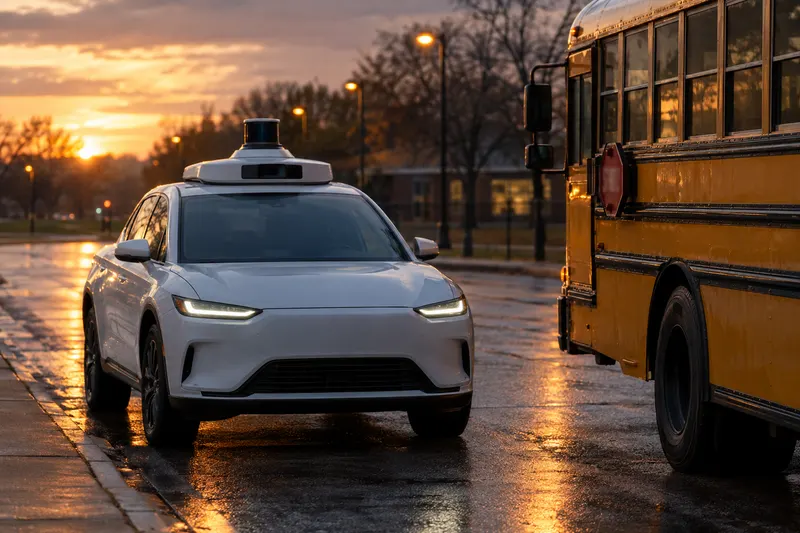
Waymo driverless rides are now open to anyone in San Antonio, San Diego or Tampa, with no waitlist. Waymo announced the public launch on October 14, and it landed in the same news cycle as a new federal probe into the company’s robotaxis passing stopped school buses.
The two developments arrived roughly 24 hours apart. One expands who can ride. The other puts Waymo’s safety record under fresh scrutiny, and it touches the same school-zone question USA 24 has already examined for Tesla’s robotaxis.
Where Waymo driverless rides are now open to everyone
According to Waymo’s October 14 post, riders in all three cities can download the Waymo app and hail a fully autonomous ride. Local outlets confirmed the change. FOX 5 San Diego reported that San Diego riders can now book rides without needing an access code.
Waymo says it has welcomed hundreds of thousands of riders in these cities since opening its service earlier this year. The rollout came in stages. San Antonio opened to its first public riders on February 24, and Electrek reported that San Diego and Tampa opened to the public on September 1.
Denver complicates the picture. Electrek reported that Denver was part of the September 1 opening, but it was not included in the October 14 announcement, and its current status is unclear. Electrek counted 14 U.S. cities after the September launch, while FOX 5 reported 13 when it covered San Diego. Until Waymo publishes a current city list, treat any single total with caution.
Electrek also cited Waymo’s previously stated target of 1 million paid rides per week by the end of 2026. That goal is a useful yardstick for judging how quickly the service is growing beyond its early markets.
How to check whether you can ride today
- Open the Waymo app and enter your pickup address. Availability is set by zone, so confirm that your location falls inside the active service area.
- Expect limits while service ramps up. Coverage may not include every neighborhood in a city, even after the waitlist is gone.
- For San Antonio airport trips, book through the same app. Fully autonomous trips to and from San Antonio International Airport are now available.
- If you are blind or have low vision, note that Waymo has pitched these rides as a mobility option for people who cannot drive.
Scott Young, board chair of Lighthouse for the Blind & Low Vision, whose clients include people in the Tampa area, is quoted in the announcement materials: “With Waymo, they get their independence back.” The quote appeared in Unite.ai’s coverage. Waymo has cited visually impaired riders and others who cannot drive as key beneficiaries.
San Antonio airport rides are the notable addition
Airport service is the most distinctive part of the San Antonio launch. News 4 San Antonio reported that the city’s aviation department backed the service. Jesus Saenz, Director of Airports for the City of San Antonio Aviation Department, told the station: “Waymo offering fully autonomous rides at the airport marks a significant milestone for Waymo, our city and travelers.”
Airport curbs are busy, tightly managed spaces, and they test a driverless system differently from a quiet residential street. A clean record there would give Waymo a stronger case for expanding to other transit hubs. Any problems would show up quickly in front of a large number of travelers.
Waymo safety record: what the numbers show
The October 14 announcement cited more than 200 million fully autonomous miles. It also claimed that data from more than 127 million miles showed a tenfold drop in serious-injury-or-worse crashes compared with human drivers. Those are company-reported figures, and the sources reviewed for this story did not independently verify them.
Judging the claim requires three things the sources do not supply: how crashes were counted, how the human-driver baseline was built, and whether an outside reviewer has checked the work. The figures may hold up under that scrutiny. They are still the company’s own accounting, and they arrived in the same week a federal regulator opened a probe into one specific failure mode.
The NHTSA school-bus probe and its history
NHTSA’s Office of Defects Investigation opened a new probe into Waymo robotaxis passing stopped school buses. Startup Fortune reported that the agency is reviewing footage from early October of a Waymo vehicle maneuvering around a stopped school bus that was unloading in Atlanta. According to the same report, NHTSA said the “likelihood of other prior similar incidents is high,” and Waymo has told regulators it plans to file a voluntary software recall.
Those details come from a single trade-outlet account so far, and the agency’s own docket and press notice were not reviewed for this story. Whether Waymo has filed the promised recall is also unconfirmed.
The problem is not new. NHTSA recalled 3,067 Waymo vehicles in December 2025 over school-bus stopping violations, according to Autoblog’s reporting. The National Transportation Safety Board opened its own investigation in January 2026, as TechCrunch reported. The first widely reported incident occurred in Atlanta in September 2025, and NHTSA opened its initial probe that October, according to The Robot Report.
A separate figure adds to the picture. Startup Fortune, citing TechCrunch, reported 20 citations for passing stopped school buses issued by the Austin Independent School District this school year. That number and the recall count come from different reports and time periods, so they should not be added together.
For families and school districts in Austin, Atlanta and other Waymo markets, the open question is how driverless cars share streets with children and school buses. Parents who want answers can ask their own districts how they are handling bus loading zones and drop-off routes near active robotaxi service.
Tampa’s regulatory debate and the competitive picture
Tampa’s rollout has drawn its own argument. FOX 13 News reported a safety debate over the expansion. A Tampa City Council official quoted by local media said Florida’s state government, not the City of Tampa, regulates ride-share operations. Local officials therefore have less direct control than many residents might expect.
Waymo is not the only company expanding. On October 13, Elon Musk said on X that Tesla would widen its Austin robotaxi service area, and Tesla’s stock rose 4.7% the following day, according to Startup Fortune. USA 24 has also reported on NHTSA’s review of Tesla robotaxis in active school zones, and regulators are now asking similar questions of several robotaxi operators.
What to watch next
Three developments will tell readers more than the launch announcement did. First, whether Waymo files its voluntary software recall and what it covers. Second, whether NHTSA’s review widens beyond the Atlanta footage. Third, whether Waymo reconciles its city counts and publishes independent safety data as it adds riders in San Antonio, San Diego and Tampa.
Denver’s status after the September opening also needs clarification. The coming weeks will show whether a service that is opening to everyone can satisfy regulators who are examining its most visible failure.