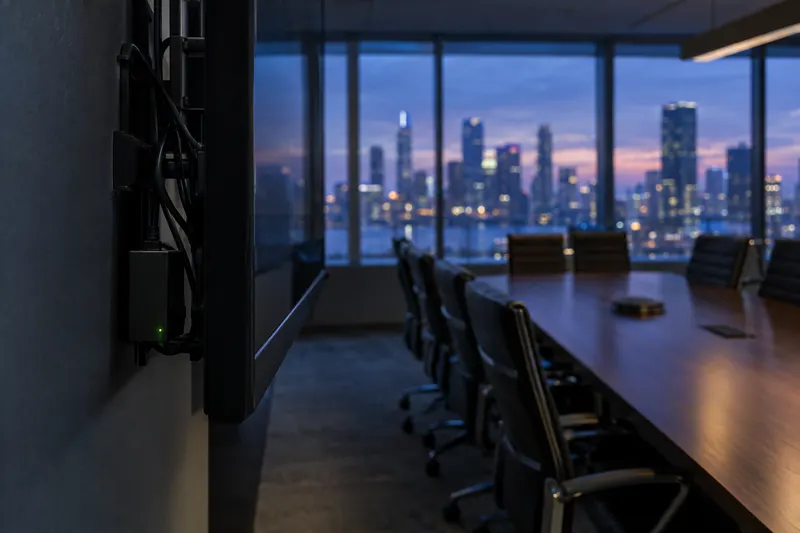
A recording device hidden in the room where OpenAI's executives meet has led to a federal criminal case against one of the company's own engineers.
The Justice Department said Tuesday, Oct. 13, that FBI agents had arrested Abdulrahman Alfozan, 35, a Saudi national who worked as an engineer at OpenAI, and charged him with "using or endeavoring to use an electronic, mechanical, or other device to intercept oral communications," according to the department's announcement. The case of an OpenAI employee arrested for allegedly bugging an executive conference room is one of the rarest kinds of security incident in the AI industry: not a hack, not a leaked file, but a physical listening device planted inside a company's offices.
That matters because the conversations held in that room are among the most valuable in tech. OpenAI, the maker of ChatGPT, is one of the most valuable private AI companies in the world, and its leaders' discussions about models, partners and strategy are exactly the kind of information that rivals would want to hear.
What the DOJ says the OpenAI employee did
The arrest followed OpenAI's discovery of what both the Justice Department and the company described as a "sophisticated recording device" inside its executive conference room, CNBC reported. The device was found in one of OpenAI's San Francisco offices, according to Bloomberg and ABC7 San Francisco.
Officials said Tuesday that the device was intended to capture sensitive conversations, ABC7 reported. The FBI made the arrest "last week," after OpenAI found the device, according to The Washington Post, which also attributed the "sophisticated" description to the company.
The public announcement came days after the arrest itself, a common pattern in federal cases where agents move first and the department publicizes charges once a defendant has appeared or a complaint is unsealed.
Alfozan has been charged, not convicted. As of Thursday, public reports had not identified a defense attorney or described any response from him to the allegations.
The Oct. 5 conference room timeline
The most detailed account of the alleged conduct so far comes from The Hacker News, which reported on the allegations in the case. According to that report, on Oct. 5, 2026, Alfozan entered the executive conference room and appeared to look behind the TV that the device was plugged into. That same day, he allegedly left a bag unattended.
Here is the sequence as it stands from public reporting:
- Oct. 5, 2026: Alfozan allegedly enters the executive conference room, appears to check behind the TV connected to the device and leaves a bag unattended.
- Week before Oct. 13: OpenAI discovers the recording device; the FBI arrests Alfozan.
- Oct. 13, 2026 (Tuesday): The Justice Department and OpenAI announce the arrest and charges.
Several things are missing from that timeline. Public reports have not said when the device was first installed, how long it was in place, whether it captured any audio, or whether any recordings left the building. Those answers will determine whether this is a story about a foiled attempt or about executive conversations that were actually exposed.
Some social media roundups have circulated additional details about how the device was concealed and how OpenAI identified the suspect. USA 24 has not confirmed those claims in the Justice Department's announcement or the mainstream news reports, and they should be treated as unverified until they appear in court filings or official statements.
What the wiretap charge means, and what's still unknown
The wording of the charge, intercepting oral communications with an electronic, mechanical or other device, closely tracks the language of the federal Wiretap Act, 18 U.S.C. § 2511, which makes it a crime to intentionally intercept private spoken conversations. The specific statute, the potential penalty, the court handling the case and the case number were not spelled out in the news reports reviewed by USA 24.
The phrase "endeavoring to use" is significant. It means prosecutors do not necessarily need to show that the device successfully recorded anything to bring the charge. An attempt to intercept conversations can be enough.
The open questions are substantial:
- Motive: Who, if anyone, the recordings were meant for. Nothing in the public record so far points to a buyer, a competitor or a government.
- Scope: Whether anything was recorded or transmitted, and for how long.
- Access: Alfozan's role and seniority at OpenAI, and whether his job gave him access to model weights, unreleased research or other sensitive systems.
- Others involved: Whether prosecutors expect additional charges or defendants.
- Custody: Whether he has been detained or released pending trial, and what he will plead.
The charging documents, once fully available, should answer several of these. Until then, much of the commentary on the case is outrunning the facts.
Why a bug at OpenAI matters for AI security
Leaders of US frontier AI labs have warned for years that their model weights, research and strategy discussions are targets for corporate and state espionage. Most of the public discussion has focused on digital threats: stolen credentials, exfiltrated code, compromised cloud accounts.
This case is different. It is about an alleged insider using a physical device to listen to executive meetings. That kind of threat bypasses network monitoring entirely. A firewall cannot hear a microphone hidden behind a television.
The timing adds weight. The AI race is intensely competitive; in the past few days, Google widened access to Gemini 4 Argon, the model it announced on Sept. 30, to paying developers and Google Cloud customers. In a market where release timing, pricing and partnership terms can shift billions of dollars in value, a recording of the right executive meeting could be worth a great deal.
For OpenAI, the case lands while the company is already under heavy outside scrutiny, including a lawsuit from eight states over ChatGPT's risks to kids and adults. It is a different kind of problem, but it adds to questions from investors and enterprise customers about how well AI vendors protect confidential information, including the partner and customer negotiations that tend to happen in exactly the kind of room where the device was found.
Expect the fallout to reach beyond OpenAI. Other AI labs are likely to tighten physical security, expand insider-threat programs and add routine sweeps of meeting rooms. The case may also feed ongoing discussion in Washington about whether frontier labs should meet formal security standards, given that their models and plans are increasingly treated as strategic national assets.
The Saudi nationality question
Several outlets, including CNBC and Al Jazeera, highlighted Alfozan's Saudi nationality in their headlines, and the Justice Department's own announcement identifies him as a Saudi national.
No public report or filing reviewed by USA 24 alleges that the Saudi government or any other foreign government was involved. The charge, as described, is a wiretap offense, not espionage on behalf of a foreign power, and prosecutors have not publicly described a motive.
That distinction matters. US AI companies employ large numbers of foreign-born engineers, and a high-profile case like this one can quickly become a talking point in debates over security screening of foreign workers. Any policy argument built on this case should wait for what the charging papers actually say.
How companies can check meeting rooms for hidden devices
Most businesses are not AI labs, but the alleged method here, a device tied to ordinary conference room equipment, could work in almost any office. Security teams and small business owners can take several concrete steps:
- Sweep sensitive rooms regularly. Check behind and beneath TVs, displays, speakerphones and AV racks for unfamiliar devices, adapters or cables. For boardrooms and executive suites, consider a professional technical surveillance countermeasures (TSCM) sweep, especially before major deals or board meetings.
- Lock down unused ports. Disable or physically block unused power, USB and AV ports on conference room TVs and gear where possible, and inventory what should be plugged in.
- Control and log access. Limit badge access to executive spaces, keep entry logs and review them when something seems off. Camera coverage of doorways, rather than inside rooms, can help without recording meetings themselves.
- Watch for unattended items. Set a clear policy that bags and devices are not left in sensitive rooms, and make it easy for staff to flag anything that looks out of place.
- Build an insider-reporting channel. Give employees a confidential way to report concerns about colleagues' behavior, and make sure someone actually follows up.
- Write down a recording policy. Spell out that no one may record meetings without consent and authorization, so violations are unambiguous.
What happens next in the OpenAI case
The next public milestones will come from the courtroom: the full criminal complaint or an indictment, a detention ruling and Alfozan's first formal response to the charges. Those filings should show how long the device was in place, whether it captured any conversations and whether investigators believe anyone else was involved. OpenAI, for its part, faces quieter questions from customers and partners about what may have been said in that room. However the case resolves, the image of a microphone hidden behind an executive conference room TV is likely to change how every major AI lab thinks about the security of its own walls.