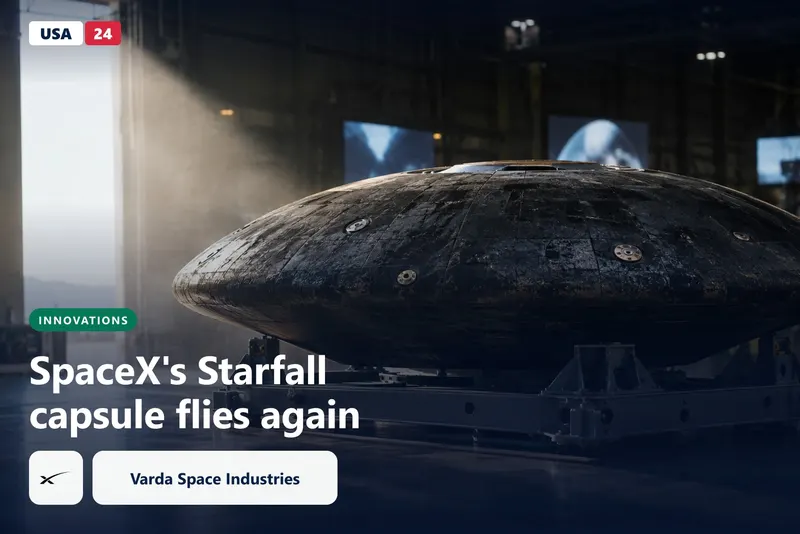
The Starfall SpaceX capsule lifted off Tuesday morning on its second flight, and the company has disclosed little about what it carries or where it will come down. Liftoff came at 7:04 a.m. EDT (11:04 UTC) from Cape Canaveral Space Force Station, on a Falcon 9 flying the Bandwagon-5 rideshare with 32 payloads in total, according to Space.com and AIAA.
The mission was first set for Monday, October 19, but weather at the booster's recovery zone pushed it back a day, Spaceflight Now reported. The first-stage booster, on its 19th flight, landed on the droneship A Shortfall of Gravitas about nine minutes after liftoff, according to Teslarati. Spaceflight Now also reported that SpaceX deployed all customer payloads by 8:45 a.m. EDT.
Those are the clean facts. The harder questions concern what this capsule is for and whether it will ever deliver cargo to paying customers.
Which payloads flew and what SpaceX has not disclosed
Spaceflight Now's headline counts 31 customer payloads alongside Starfall, which squares with the 32-payload total in other coverage. One of those payloads belonged to Varda Space Industries, whose W-Series 7 capsule flew on the same rocket. Varda's flight gets its own section below.
SpaceX has not said whether this Starfall carries any payload. It has also not said where or how the capsule will come down. That leaves the most basic question open: is this flight a test, a paid cargo run, or both?
The company did describe its goals in June. After the first flight, SpaceX said in a statement on X that Starfall "will enable affordable, routine access to the microgravity environment for scientific research and in-space manufacturing." That line describes the program's purpose, not the results of any flight. No comparable statement about this launch has surfaced.
Results from the first flight are also thin. Coverage from June describes the demonstration's objectives, not a documented reentry or splashdown outcome. The second launch therefore arrives before the public has a verified record of how the first capsule performed.
Starfall specs and the return capacity debate
Most of the hardware details come from an FAA environmental assessment published in May. The figures that appear across coverage are:
- Diameter: about 3.1 meters (about 10.2 feet), disk-shaped
- Height: about 2.5 feet
- Empty mass: about 4,600 pounds (about 2,100 kg)
- Return capacity: up to about 2,200 pounds (about 1,000 kg) of payload
- Maximum reentry mass: about 3,100 kg, per Gunter's Space Page
- Propulsion: no main engine, with cold-gas thrusters for attitude control
- Heat shield: carbon fiber, for reentry
The numbers agree on paper. The 2,100-kilogram empty mass plus the 1,000-kilogram payload allowance equals the 3,100-kilogram maximum reentry mass. The payload figure, however, is a target rather than a demonstrated return. TechTimes described the 1,000-kilogram number as a design specification from a regulatory filing, not mass brought back from space.
Space.com and others cite the FAA's 2,200-pound return figure. That is the same number in imperial units, so readers see it repeated across outlets without any independent confirmation of an actual return.
How Starfall compares with Varda's W-Series capsules
Varda's W-Series 7 is roughly a third the size of Starfall. It is meant to test whether microgravity improves the solubility of Protac, a cancer drug, according to launch coverage. Varda has flown multiple reentry capsules, and SpaceX has been its launch provider since 2021, Teslarati reported.
That relationship deserves a closer look. SpaceX carries Varda's hardware to orbit, and with Starfall it is building its own way to bring hardware home. The company is both a supplier to a reentry company and a potential competitor to it.
The scale gap is wide. Gagadget reports that Varda's older W-series capsules return roughly 30 to 33 kilograms per mission. Measured against Starfall's 1,000-kilogram design figure, that is roughly thirtyfold. Scale is the commercial case for Starfall, and it is also the biggest engineering risk. A larger capsule needs a heavier heat shield and a more demanding recovery plan, and a failure at that size costs more.
Who could buy a Starfall return service, and at what price
For pharmaceutical, materials and space manufacturing companies, Starfall points to a possible future route for bringing products back from orbit. Nothing is for sale today. SpaceX has named no customer and no operational date.
Pricing is the largest unknown. The only published figure in the research is for launch. NASASpaceFlight reports that SpaceX's Transporter and Bandwagon missions carry payloads up to 50 kilograms for $350,000. Return pricing has not been disclosed, so a company weighing a return service would be comparing a known launch price against an unpriced reentry service.
Coverage of the business model leans on a freight comparison. Gunter's Space Page and Gagadget describe SpaceX selling rideshare slots the way a freight carrier sells container space, with Starfall as a possible return leg on top of that. In that picture, a return service would reuse the same customers and the same launch relationships.
For investors and space-economy professionals, the strategic question is larger. TechTimes notes that SpaceX plays only the launch-provider role in orbit today. If Starfall works, SpaceX could become the landlord for orbital manufacturing, controlling both the trip up and the trip down. That would give it considerable say over which companies build in orbit and what they pay.
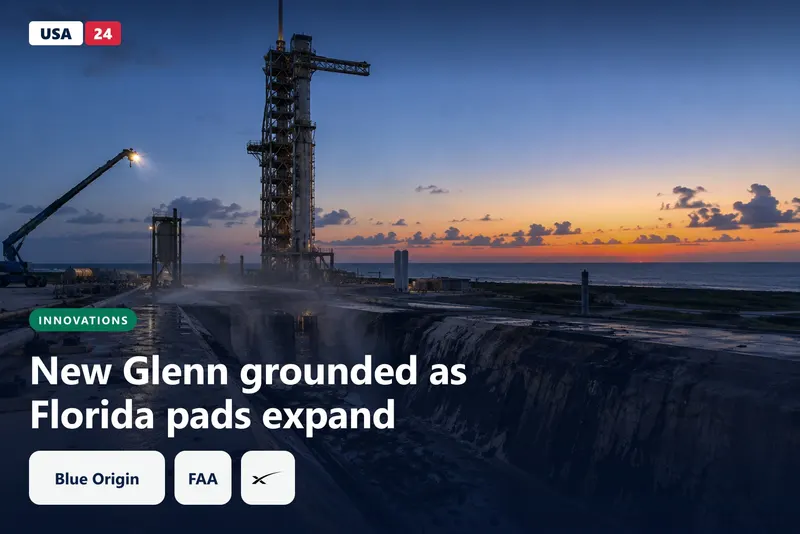
Florida launch capacity matters here too. USA 24 has covered Blue Origin's plan to seek 50 launches a year from a single Florida pad, which shows how much the state's launch infrastructure is now part of the competition.
What to watch next and how to follow the program
General readers have no practical step to take on Starfall yet. Companies with a possible business case for orbital return can track the program with a few concrete checks:
- Read the FAA environmental assessment published in May, which remains the most detailed public description of the vehicle.
- Check each SpaceX rideshare manifest for a listed Starfall payload, since the company has not named customers.
- Look for a published landing site and recovery method after each flight.
Four open questions will shape the next few months. The first is whether this flight carries customer cargo, and whether SpaceX confirms it. The second is where and how this capsule lands. Earlier reporting describes a parachute-assisted splashdown in the Pacific roughly 1,300 km off the US or Mexican coast, with the heat shield jettisoned before water entry. SatNews reported that the FAA has approved those reentry test flights.
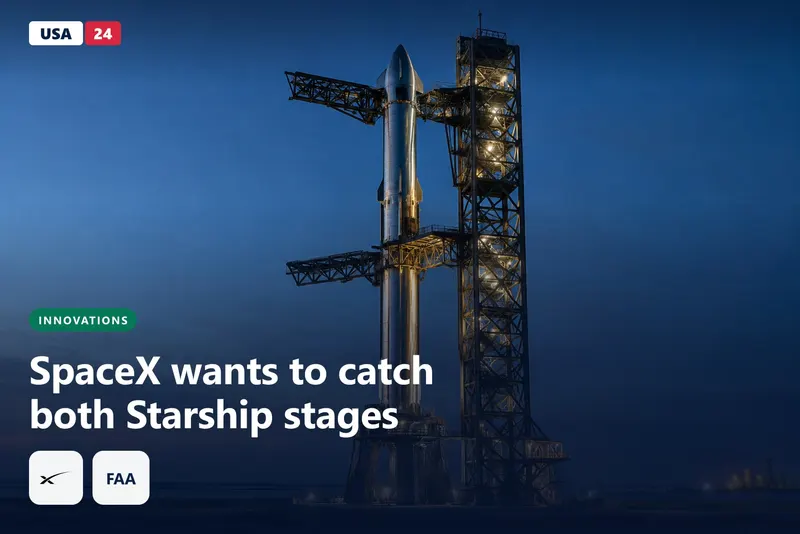
The third question is what the first flight's reentry showed, which no source has documented. The fourth is timing. SpaceX plans to eventually launch Starfall on Starship, and that schedule will depend on Starship's own test program, including the planned Flight 15 tower catch of an upper stage.
Future flights will need to answer the questions this one left open. If SpaceX names a payload, publishes a landing site and shows a clean splashdown, Starfall moves from demonstration toward a service customers can price. If the company stays quiet, it will remain a promising design without a confirmed paying cargo customer.