A new IBM quantum error correction testbed launched on November 5, 2026, linking a 120-qubit IBM quantum processor with Oak Ridge National Laboratory's AMD-powered supercomputer. The partners describe it as a co-design platform that joins quantum and high-performance computing, so researchers can test error-correction codes and decoders at scale.
For most people the news changes nothing right away. No consumer product or price has been announced. For investors, national-lab scientists and professionals tracking the quantum race, though, it is one of the first federal-lab-plus-industry testbeds built specifically for error correction, the step many in the field see as necessary before quantum machines become useful.
What the IBM quantum error correction platform includes
The announcement came through a PR Newswire release carried by TradingView that was datelined Poughkeepsie, N.Y. The Quantum Science Center at Oak Ridge National Laboratory, which the Department of Energy funds, joined IBM and AMD on the effort. The first deployment places IBM's quantum computers alongside ORNL's Umbra high-performance computing system.
The main components, as described across the release and coverage, are:
- Quantum side: a 120-qubit IBM Quantum Nighthawk processor
- Classical side: Umbra, which runs AMD Instinct MI355X GPUs and 5th Gen AMD EPYC CPUs
- Physical home: IBM's site in Poughkeepsie, New York, according to the IBM Quantum blog
- Connection: the Oak Ridge Leadership Computing Facility in Tennessee, according to Investing.com
The division of labor matters most for engineers. AMD supplies the classical computing layer for decoding and software orchestration, according to IndexBox's summary of the release. Decoding means reading error signals from a quantum processor and working out how to correct them, so the speed of the classical hardware shapes how well the quantum side performs.
Why the processor name needs confirmation
The sources do not agree on the processor name. The PR Newswire release says 120-qubit IBM Quantum Nighthawk, while IBM's blog describes the quantum side as Nighthawk r2 processors. The sources do not establish whether those labels describe the same configuration, so the exact model should be confirmed with IBM or ORNL before anyone treats it as a settled specification.
The discrepancy does not change the core story, which is the pairing of IBM quantum hardware with AMD-based classical computing at ORNL. It does matter for anyone comparing this system with other quantum processors.
Why error correction is the bottleneck
Qubits are fragile, and errors compound quickly in long calculations, according to SiliconANGLE. That is why work on decoders and codes sits at the center of the quantum effort rather than at its edges.
The platform also builds on earlier results. In 2025, IBM and AMD demonstrated a quantum error-decoding algorithm on AMD chips. IBM and ORNL have also run simulations pairing IBM quantum computers with the Frontier supercomputer, according to MLQ.ai's coverage. The new platform moves that pairing into a co-design system built for testing codes and decoders.
Jay Gambetta, IBM Fellow and director of IBM Research, put the point in a line MLQ.ai quoted: "The question is no longer if error correction will work on quantum hardware." The line suggests IBM now treats the open question as engineering rather than feasibility, although the release does not yet publish performance data to support that view.
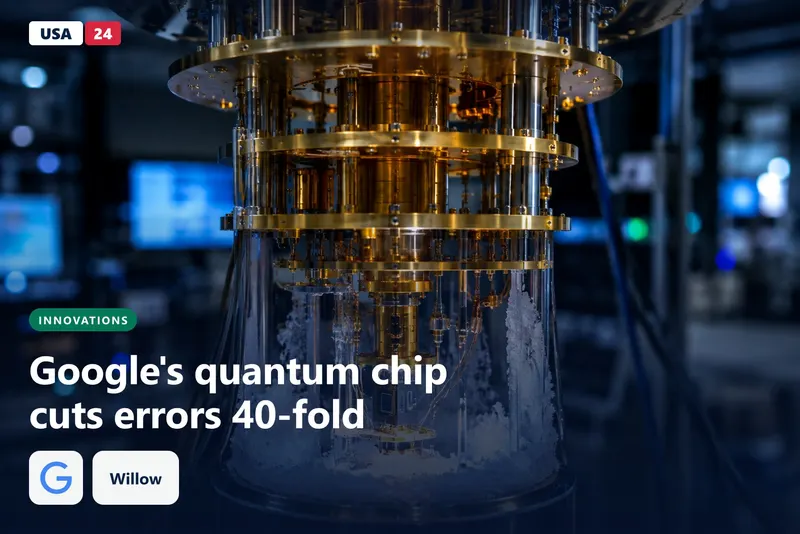
Google has reported a related advance. Its magic state cultivation technique reduced errors about 40-fold on its Willow processor, according to a Google Blog post describing work published in Science. Google's result targets one technique on one chip, while the IBM and ORNL platform gives researchers a shared system for measuring codes and decoders.
The Futurum analysis frames the project as a contest over classical silicon, since error correction depends heavily on fast classical processing. That treats the decoding chips as part of the quantum race, not a supporting act.
Who gains and who carries the risk
IBM gets a visible showcase for its Nighthawk hardware and its error-correction roadmap, placed inside a federal research program rather than a consumer launch. AMD gains a role in the classical layer that error correction depends on, which is where its Instinct GPUs and EPYC CPUs sit in this deployment.
ORNL and its partners gain a shared testbed, which may widen access for scientists who do not operate quantum hardware of their own. That is the clearest near-term benefit, and it accrues to the research community rather than to buyers of a product.
The risks sit mostly with timelines. The 2028 goal is public and specific, so if error-correction results arrive late or fall short, the platform will be measured against that deadline. Google has already put a result on the record for its Willow processor, so IBM and ORNL will face comparisons once they publish their own numbers. Investors should also watch whether AMD's classical role grows beyond this first deployment, since that would show whether it becomes a lasting business or a one-time research contract.
What the Quantum Genesis Mission targets
The Department of Energy ties the platform to its Quantum Genesis Mission, which sets a late-2028 target for a scientifically relevant quantum computer. According to The Quantum Insider, the mission's specific goal is 100 logical qubits running 100,000 hard operations by late 2028.
Logical qubits are error-corrected qubits built from many physical qubits, so that target depends directly on the error-correction work this platform is meant to test. The numbers are ambitious, and none of the sources reviewed includes an independent assessment of whether the timeline holds.
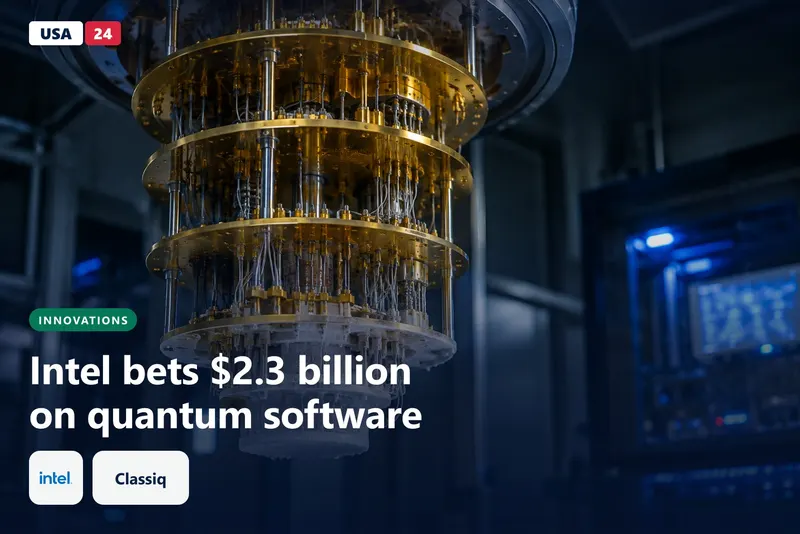
Intel's agreement to buy quantum software maker Classiq for $2.3 billion suggests a related bet: money is moving toward the software and control layers around qubits, as well as toward the qubits themselves.
One figure needs caution. An aggregator summary says IBM's hierarchical codes could reach a trillion logical operations at a physical error rate of one in a thousand. That claim traces to a single secondary source, so this article leaves it out until IBM states it directly.
What the platform does not show yet
The release does not publish error-correction performance numbers from the platform, so there is no measured result to judge yet. Funding terms, costs and access rules for outside researchers were not found in the sources reviewed. Without those details, the platform is an instrument rather than a result, and readers should judge it on what it measures later.
The current gaps include:
- Performance: no error-correction results from the platform have been published
- Access: no rules for outside researchers were found in the sources reviewed
- Cost: no funding terms or price were disclosed
- Consumer impact: no product, price or device change has been announced
Who should track this and what to watch next
Consumers need to take no action. Nothing in this launch requires patching a device, changing a setting or protecting an account. Professionals who want to follow the work should watch ORNL's user program announcements, DOE updates on the Quantum Genesis Mission and IBM's Quantum blog, where the most detailed technical description so far appears.
Three developments will show whether the platform moves quantum error correction forward. The first is a confirmed processor specification that settles the Nighthawk naming question. The second is published error-correction results from scientists using the system. The third is clear access terms for outside researchers. Any one of them would give the 2028 target a firmer test than the announcement can.