Target told shoppers on October 15 that it does not use customer identities or locations to raise prices. Walmart has made a parallel pledge about its digital shelf labels, customer data and AI shopping tools, and it reaffirmed that pledge in early October. Both denials arrived as federal regulators and state lawmakers push for disclosure rules on what critics call "surveillance pricing."
The timing matters. An Associated Press explainer published October 18 put AI-assisted pricing in front of mainstream shoppers, and the Federal Trade Commission's proposed personalized-pricing policy is still pending. The reporting does not show a confirmed breach or a confirmed case of individualized pricing. What the public has are company statements, and the policy fight is over what those statements should have to disclose.
What Target said on October 15
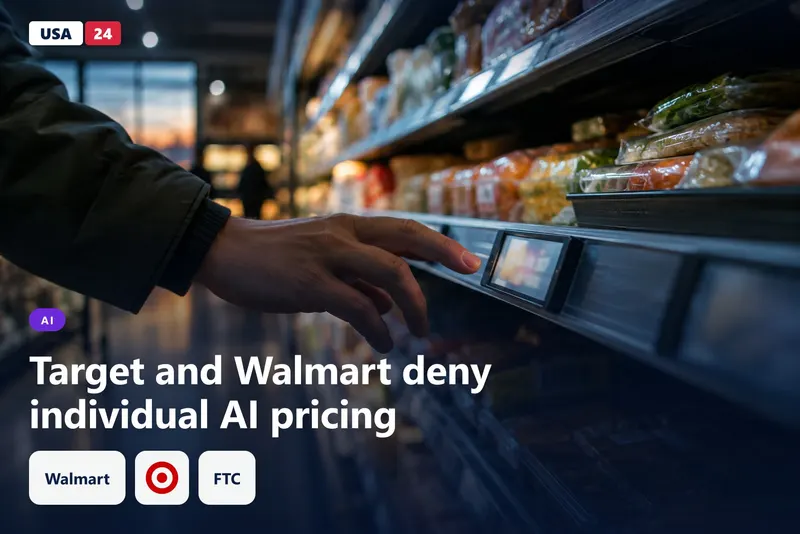
In a statement relayed by a trade outlet citing Reuters, Target said it does not use customer identities or locations to raise prices. The company also said it does not adjust prices by time of day or during high-demand periods.
Target did not deny that prices move. It said prices can vary with local operating costs, competition, regulations, and store or channel discounts. Shoppers at the same location or on the same platform, the company said, see the same price.
A PBS NewsHour report quoted a Target company statement about its app: the company wants to "provide guests with accurate pricing, which can vary across stores and channels." That line concedes variation by store and by channel. It says nothing about variation by person, which is the distinction at the center of the debate.
Target also said its Target Circle loyalty program uses shopping histories to recommend deals but does not influence the prices individual customers are charged. Critics see a thin line there. A personalized coupon and a personalized price can look alike to a shopper at checkout, even when the logic behind them differs.
Walmart's pledge and the shelf label rumors
Walmart says its digital shelf labels, customer data and AI shopping tools are not used to decide what individual shoppers pay. The company reaffirmed that position in early October, as Fox Business reported. Walmart CEO John Furner put it more bluntly in a written statement that PBS NewsHour reported: "We price the product, not the person."
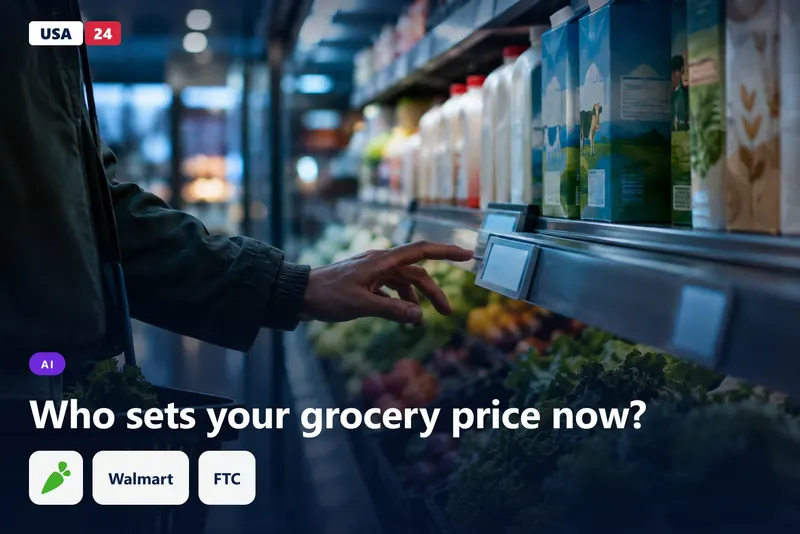
Electronic shelf labels have drawn most of the online speculation. Some social media posts claim the labels could let stores scan shoppers' faces or phones and set a price for each person. AP reports that some of those posts falsely imply this, according to its October 18 story.
The distinction matters. An electronic shelf label lets a store change a shelf price from a central system. That is a different capability from identifying a particular shopper standing in front of it. The sources reviewed do not show any retailer connecting the two. AP also reports that Walmart and McDonald's have said critics misunderstand how their pricing tools work.
Target has its own history in this area. FOX 4 reported that Target agreed to a $5 million settlement with California over app pricing that allegedly changed in stores, along with a ban on using geofencing to raise prices. The reporting does not say whether AI tools, as opposed to conventional pricing software, played any role in those changes. USA 24 has separately covered Instacart halting AI pricing tests, a different story from these retailer denials.
What the FTC proposed in August
On August 19, 2026, the Federal Trade Commission released a proposed enforcement policy statement on personalized pricing. The statement says businesses should clearly disclose when a price is personalized, the basis for that price, and the types of data used. The commission voted 2-0 to issue the proposal under Chairman Andrew Ferguson, according to Holland & Knight. Ferguson said in the agency's August announcement: "When consumers see a listed price, they expect it to be the same price that everyone else sees."
Two limits matter. Congress has not given the FTC authority to ban personalized pricing outright. The agency relies instead on Section 5 of the FTC Act, which bars unfair or deceptive practices, and targets concealed personalized pricing, according to Paul Weiss. The statement is also a proposal, and even if finalized it would not carry the force of law. In practical terms, it signals how the agency may use existing authority. It does not create a new rule.
The proposal builds on earlier work. The FTC issued orders in 2024 to eight companies offering personalized-pricing products, then released initial findings in January 2025, according to Davis+Gilbert's summary on Legal 500. The timeline below puts the recent events in order.
| Date | What happened |
|---|---|
| 2024 | FTC issues orders to eight companies offering personalized-pricing products |
| January 2025 | FTC releases initial findings from that work |
| February 2026 | US senators introduce the Stop Price Gouging in Grocery Stores Act |
| August 19, 2026 | FTC proposes personalized-pricing enforcement policy statement |
| September 25, 2026 | Comment deadline listed for docket FTC-2026-1057 |
| October 15, 2026 | Target says it does not use identities or locations to raise prices |
| October 18, 2026 | AP publishes its consumer-apprehension story |
Where state lawmakers and Congress stand
Legislators in at least 30 states considered pricing bills this year, including measures on algorithmic and personalized pricing, according to the National Conference of State Legislatures as cited by AP. A separate law firm tally counts more than 50 surveillance pricing bills pending across 26 states. One figure covers bills considered during the year and the other covers bills still pending, so the two are not directly comparable.
New York is already ahead of the federal debate. Stores there must disclose if they use AI to price items, according to Yahoo Finance. On the federal side, US senators introduced the Stop Price Gouging in Grocery Stores Act in February 2026. The bill would bar corporations from using new technologies to raise grocery prices.
The core disagreement is about benefits. Retailers argue that a ban could eliminate loyalty discounts. Critics counter that the same shopper data that powers a personalized discount is what makes personalized pricing possible. That argument will shape whether lawmakers choose to ban these practices or simply require disclosure.
Comment deadline and what remains unclear
The FTC docket, FTC-2026-1057, lists September 25 as the comment deadline. Paul Weiss describes a 30-day comment period, and that description does not clearly line up with the September 25 date. Because today is October 19, the window may already be closed. Check the Federal Register for the controlling date before relying on either figure.
Other gaps remain. The sources do not show an independent audit of Walmart's or Target's pricing systems, so both denials rest on company statements. USA 24 saw Target's October 15 statement through a trade outlet citing Reuters and did not review the original Reuters text. Whether AI tools, as opposed to conventional pricing software, play any role in specific price changes is also unclear.
What shoppers can do now
- Compare the price shown in a retailer's app with the shelf price in the same store. Target says shoppers at the same location or on the same platform see the same price, so a mismatch is worth documenting with a screenshot.
- Review loyalty-program privacy settings and data-sharing choices, and check whether location access is switched on for shopping apps.
- Ask retailers what data, if any, feeds their prices. Store managers and customer service can answer, and a written reply creates a record.
- If you suspect undisclosed personalized pricing, report it to the FTC or your state attorney general.
- In New York, look for AI-pricing disclosures on shelves.
The same data questions surface in other consumer products. A recent report found that ChatGPT ads can target users by email and phone number. USA 24 has also examined what buyers should know about Amazon's Bee AI wearables, which record conversations.
What comes next
Watch for the FTC's next step on its policy statement, and whether the agency changes the proposal before finalizing it. Watch whether the Stop Price Gouging in Grocery Stores Act advances, and whether New York's disclosure rule becomes a template for other states. Target and Walmart have staked out clear public positions. The next test is whether disclosure rules or independent audits can turn those denials into facts that shoppers can check.