At one store, the same item can carry different prices for different shoppers. Instacart says that confused its customers enough that it has stopped letting retailers run AI-based pricing tests on its platform, effective immediately.
The reversal lands as the debate over surveillance pricing moves from airline seats and hotel rooms into the grocery bill. An Associated Press national story published Saturday, October 17, and redistributed the next day, reported that consumer anger is growing as U.S. retailers and restaurant chains expand AI-assisted pricing tools. The AP report on ABC News is one of the clearest accounts of the trend, and it landed the same week Instacart pulled back.
What surveillance pricing means for grocery shoppers
As the AP defines it, surveillance pricing uses personal data such as location, browsing history, purchase history and device type to help set the prices consumers see online, according to the AP story carried by NBC Philadelphia. Shoppers already live with variable prices for flights, hotels and rides. The AP reporting says everyday grocery pricing shaped by algorithms and personal data has struck a nerve.
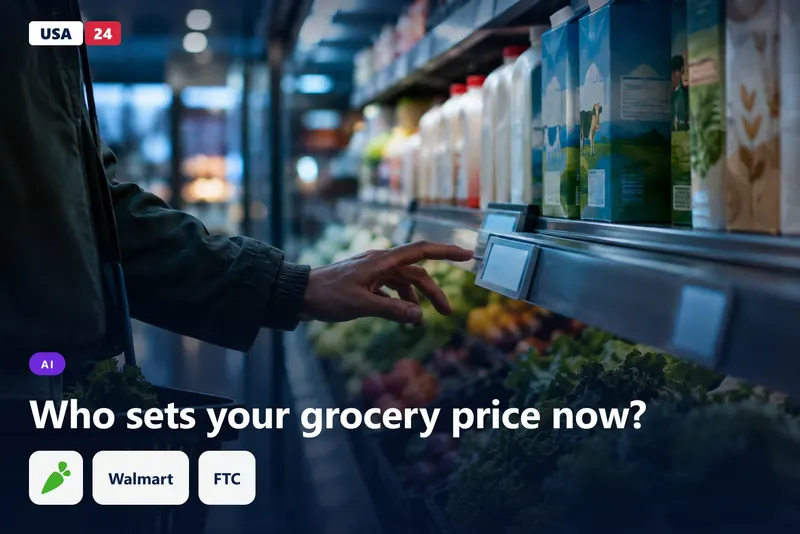
The tools work by predicting how a given customer will respond to a given price. Retailers are also replacing paper tags with digital shelf labels in grocery aisles, which lets a store change a displayed price without reprinting anything. That combination is what makes shoppers uneasy: the price on the shelf is no longer a fixed fact that everyone sees in the same way.
The National Retail Federation makes a simpler argument. It says algorithmic pricing is a new tool for something retailers have always done, which is adjusting prices for supply, demand, seasonality and competitors, as the U.S. News version of the AP report describes it. Both sides agree that prices move. They disagree about whether a personal profile should be part of the calculation.
Instacart's tests, the FTC probe and the Eversight deal
Instacart had already moved away from one approach before this week. It ended tests that randomly assigned shoppers to groups instead of setting prices from personal information. The halt that followed covers AI-based tests that retailers ran through its Eversight technology.
The pressure built from outside research. A Consumer Reports, Groundwork Collaborative and More Perfect Union investigation found shoppers on Instacart seeing different prices for identical products. A separate recent study by Consumer Reports and others found about a 7% price variation for the same basket of goods at one store. That study said the gap could mean more than $1,000 a year in extra grocery costs for some households, according to RTTNews via Nasdaq.
Reuters reported last week that the Federal Trade Commission had issued a civil investigative demand over Instacart's pricing practices, according to the same Nasdaq report. The FTC has used the same type of demand in other AI matters, including its civil investigative demands to OpenAI and Anthropic. A demand is a request for documents and information, not a finding of wrongdoing, and the scope of the Instacart demand has not been made public in the reporting.
Instacart also agreed to pay $60 million in refunds to settle FTC claims tied to its subscription sign-up process and advertising. The company denies wrongdoing, and that settlement is separate from the pricing matter. Still, the timing matters. Instacart paid $59 million for Eversight in 2022, so pulling back from a feature built on a product it owns is a notable decision.
Walmart's shelf labels and the face-scanning rumor
Social media posts have claimed that electronic shelf labels Walmart plans to install in all U.S. stores will scan shoppers' faces or phones to set individual prices. The AP reporting, as carried by The Boston Globe, describes those claims as false.
Walmart CEO John Furner said in a blog post that the labels are not used to raise prices based on weather, time of day or individual shopper. As AP quoted him, the line was "We price the product, not the person." That is a specific denial, and it is the most direct statement from a major grocer in the current debate.
Walmart's denial does not settle the broader question. Whether other retailers use personal data in electronic shelf labels remains disputed, and the reporting does not establish how widely any such practice runs. The Globe's account also recalled a 2022 lawsuit in which California prosecutors sued Target, alleging its app showed lower prices before shoppers entered stores and higher prices inside.
What state lawmakers and the FTC could do next
Legislators in at least 30 states have considered pricing bills this year, according to the National Conference of State Legislatures. That figure measures how much attention the issue is getting, not how many laws will take effect. The reporting does not say which bills will pass.
At the federal level, the FTC has proposed an enforcement policy warning that failing to disclose the use of personal data to set individualized prices could violate consumer protection law. That proposal is not final, and its reach will depend on how the agency defines individualized pricing and what counts as adequate disclosure.
The federal picture pulls in another direction. The Trump administration's AI framework seeks to preempt conflicting state AI laws, so state pricing bills and FTC action may collide. Whether a preemption push would reach state pricing rules is a legal question the reporting leaves open, and it will matter a great deal to shoppers in states that move first.
The argument is also about trust. Katie Thomas, who leads a consumer behavior think tank at the consulting firm Kearney, described "major tensions happening right now" between shoppers and companies over who holds the power in algorithmic pricing, as AP reported. Jay Zagorsky, a senior lecturer at the Boston University Questrom School of Business, told CBS News that "nothing positive is gained by a merchant stating they are doing this." His comment captures why disclosure is a hard sell for retailers that use these tools.
How to check whether your grocery prices differ
You cannot see the model behind a price, but you can run a simple comparison. These steps are practical suggestions, not findings from the reporting.
- Compare the same item in a logged-in and a logged-out browser window, and note both prices and the time.
- Check whether a grocery app shows different prices for the same item at the same store, or after you switch accounts.
- Use a price-tracking tool to log prices over several weeks, since a single check can miss a pattern.
- Save timestamped screenshots so you have evidence if you report a discrepancy.
- Report suspected unfair pricing to the FTC or your state attorney general.
What to watch next
Several questions will decide whether Instacart's halt becomes a turning point or a pause. The company has not said whether the halt is permanent, and the reporting does not say how many retail partners were involved. The scope of the FTC's civil investigative demand is also unclear, and so is whether the agency's proposed enforcement policy becomes final.
State legislatures will show how far the pressure travels. Watch which of the bills pending in at least 30 states move forward, and whether federal preemption becomes the deciding factor. Retailers that run shelf-label or app pricing should also expect questions about whether personal data plays any role in what shoppers see.
The next test will come in statehouses and at the FTC, where the question is whether a shelf price can depend on who is looking at it. For now, the fight over surveillance pricing has moved to the grocery bill, where shoppers can check the numbers themselves.