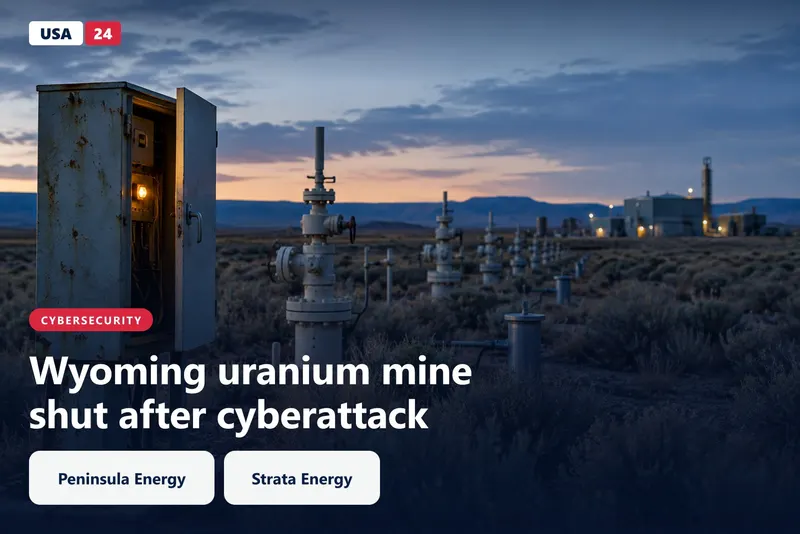
The Peninsula Energy cyberattack has kept Lance, the company’s uranium mine in Wyoming, shut since November 20, and no restart date has been set. Shares in the Australian-listed owner remain halted on the Australian Securities Exchange. The site sits about 380 km north of the state capital, Cheyenne, according to The Northern Miner. It stands out because it hit an operating American industrial plant, not a database or a software flaw.
What Peninsula Energy has confirmed about the cyberattack
Peninsula said Strata Energy identified the incident on November 20 and that it affected operating and control systems at Lance’s plant and wellfield. The company temporarily shut down operations, isolated affected systems, notified relevant US authorities and engaged outside cybersecurity, forensic and legal advisers, according to a TipRanks summary of the ASX announcement.
A later ASX update dated November 25, titled “Update on Lance Cyber Security Incident and Recovery Program,” is the most detailed statement so far. Lance stays suspended until recovery and safety checks are complete, and the company promised a timeline update in the coming days, as DiscoveryAlert reported.
CEO George Bauk gave shareholders a narrower account at Monday’s annual meeting. “The cyberattack was on the Lance project’s operating server and system,” he said, according to The Northern Miner. He also said administrative systems at the mine and the corporate office were unaffected. Early filings made the same point.
That split matters. The company is drawing a line between the operating layer that runs extraction and processing and the office networks that handle email, accounting and records. Keeping the office side clean is good news for the business, but it also means the attacker reached the systems that keep the plant running.
Why the trading halt has no clear end date
Peninsula requested a trading halt on November 23, as Mugglehead reported. SecurityWeek tied the halt directly to the incident at the Wyoming mine.
Reports disagree on when trading resumes. One account says the halt would end at normal trading on November 25. A BreachNews report says shares stay suspended until the earlier of trading on Monday, November 30, 2026, or an announcement on the restart and any production guidance impact. Because the shares remain halted, the November 25 date has passed without a resumption. The ASX announcement page is the most reliable reference for timing, so readers should check it rather than secondary coverage.
Which systems were hit, and what remains unknown
The incident affected plant and wellfield operating and control systems. Peninsula has not confirmed whether operational technology or industrial control equipment itself was compromised. Confirming that would turn a server intrusion into a question about the physical controllers that run the process.
Peninsula has not said who was behind the attack. One report notes that the available evidence does not establish that ransomware caused the Peninsula incident, per The420. A Wyoming cybersecurity counselor quoted by QNC News said an insider could not yet be excluded.
Whether data was taken is also unclear. Peninsula said broader inquiries are examining potential data impacts.
Production and inventory at risk during the shutdown
Lance reported 15,588 pounds of uranium concentrate drummed in the September quarter, up from 11,482 pounds in the June quarter, according to Northern Miner. That rise shows the mine was recovering. It still sits well short of the 2026 production target of 400,000 to 500,000 pounds of uranium oxide, which Peninsula withdrew in July because of operational difficulties.
Inventory adds a second thread. Peninsula holds about 40,000 pounds on site and was waiting for Cameco to sign off on product specifications before trucking it off site. The reporting does not say whether the shutdown has delayed that shipment.
Shares last traded at A16 cents on Friday, valuing the company at A$91.4 million, or about C$87 million. The available reporting does not quantify what the shutdown has cost. Peninsula said it cannot yet assess whether the incident will materially affect production guidance for calendar year 2027, and it will reassess once operations resume.
Why uranium mines are drawing attention from attackers
Lance uses in-situ recovery, or ISR. In that method, uranium-bearing liquids are pulled from production wells and processed into yellowcake, an intermediate product that can be converted into nuclear fuel, as Cybernews explains. That makes the plant and wellfield control systems the core of production, so a disruption there halts output quickly.
Mining has been a recurring target. In October, AngloGold Ashanti said it detected unauthorized activity on certain systems but that its mining operations were not affected.
One online report argued that uranium’s critical-mineral status likely makes an operating US uranium mine a more attractive target, per SQ Magazine. That is analysis, not a confirmed finding. A Cybernews researcher suggested that targeting operations rather than administrative systems could point to a politically motivated attack, but no attribution has been made.
One report also grouped Lance with ransomware-linked malware found in a South African air traffic operator’s operational technology network and a cyberattack on Equinor’s IT systems. Attacks on management and control layers are not new. USA 24 has reported on hackers who breached 22 organizations through Check Point management servers, a reminder that those control points are valuable targets.
What the outage means for US uranium supply
Lance is one mine, and the reporting does not show a national effect. BeInsure notes that domestic uranium producers account for a limited share of US nuclear fuel supply. The incident does not establish a broader uranium shortage or any disruption to reactor fuel availability. Peninsula has said it has not reported consequences for reactor operations, fuel deliveries or downstream customers.
The reported US impact so far is limited to the mine’s operations and the local Wyoming economy. Restart timing is the open variable. Mary Keane, a cybersecurity business counselor with CyberWyoming, said a mine may take time to come back online after an event like this, describing the process as “not like an on off switch.”
The question of recovery time is also familiar from other federal cases. USA 24 has covered Treasury’s FinCEN taking systems offline after unauthorized access, where restoring normal service was the central problem.
What operators and investors should do now
Operators of industrial control systems should take several steps now, regardless of what happened in Wyoming:
- Confirm that operational technology networks are segmented from IT and corporate networks, so a compromise in the office cannot spread to the plant.
- Restrict remote access to control systems, require strong authentication for it, and log and monitor every session.
- Keep offline copies of controller configurations and test restoring them, so recovery does not depend on the systems that were compromised.
- Decide in advance who can shut down a process and who contacts federal agencies such as CISA and the FBI.
Holders of Peninsula shares should follow ASX announcements directly rather than relying on secondary coverage, since the reports disagree on halt timing.
The next signals are concrete. Peninsula has promised a restart timeline in the coming days, and that update should say whether the company now believes operating control equipment was compromised. Watch for any statement on calendar 2027 production guidance, news on the 40,000 pounds of inventory and the Cameco sign-off, and any attribution from investigators. Until those arrive, the central question is when Lance can safely return to service.