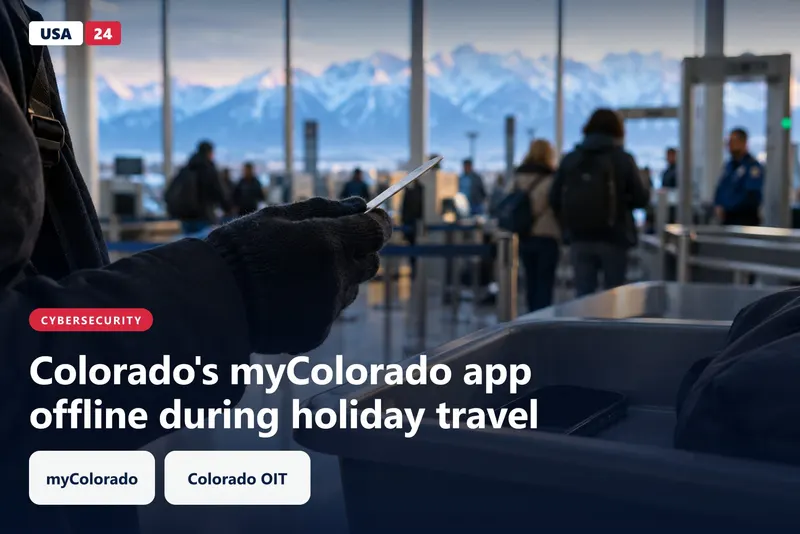
The myColorado app breach has left Colorado residents without a state-run digital ID just as Thanksgiving travel peaks. The state shut the app down on Nov. 18 after an unauthorized user accessed platform data, and as of Nov. 24 it remained offline with no restoration date. Officials have not said what personal information was reached, and the number of affected people is still an estimate.
How the myColorado breach unfolded
The Colorado Governor's Office of Information Technology, known as OIT, found a cybersecurity incident in the myColorado app on Nov. 18. According to KKTV, an unauthorized user was able to access platform data. OIT shut the app down and began an investigation.
The state's outage page, updated Nov. 23, says it is "investigating a cybersecurity incident involving myColorado." Kiowa County Press reported the same language, and DataBreaches.net carried the account as well. The state confirmed the incident publicly on Nov. 23 and 24, which means residents heard about it roughly five days after the app was shut down.
That gap is common when an investigation is still open, but it leaves people guessing about their own exposure. The app is the state's platform for mobile ID and other government services, so a shutdown touches far more people than a breach count alone would suggest.
What data the myColorado breach may have exposed
The numbers are the most important details to get right, and they are easy to mix up. OIT estimates that the breach may have affected data for 50,000 to 150,000 people. The app has about 2.1 million users. A KKTV video segment said "over two million users" could not access the app, but that figure measures how many people the outage reaches, not how many had information taken.
| Item | What is known |
|---|---|
| Incident discovered | Nov. 18, 2026, late in the day |
| App shut down | Nov. 18, 2026 |
| Estimated people affected | 50,000 to 150,000 |
| App user base | About 2.1 million |
| Outage page last updated | Nov. 23, 2026 |
| Data types exposed | Not disclosed |
| Restoration date | None set |
The state has not said what kinds of information were reached. Without that detail, residents cannot tell what kind of exposure to expect or which accounts they should watch. A breach that touches identity documents calls for different precautions than one that touches contact details, and the state has not drawn that line.
Why the outage hits Thanksgiving travel
The timing makes this outage more than an inconvenience. CBS Colorado reported that the outage blocks travelers from using the Mobile Driver License feature for airport security screening, and World Today News carried that report. For people who moved their ID onto a phone, that feature was the document they expected to show at the checkpoint.
While the app is down, officials urge residents to use physical driver licenses or state-issued ID cards for identity verification. They also point people to agency websites, such as the Division of Motor Vehicles portal, for registration and license renewals. The state says it has no confirmed timeline for restoring service, and it has apologized for the disruption during the holiday travel week.
The fallback works only for people who still carry a physical card. Someone whose license has lapsed, or who left it at home, has no backup. That is the lesson for any state that offers phone-based IDs: the digital credential is convenient, but the plastic card is the safety net, and it needs to stay current.
What Colorado residents should do now
Several steps can reduce the trouble while the app is offline and after the state begins notifying people.
- Carry a physical driver license or state-issued ID card when you fly or need to verify your identity. Keep it with you until the state says the app is back.
- Go to agency websites directly, such as the DMV portal, rather than clicking links in unsolicited emails, texts or calls about the breach.
- Check the state's official outage page for updates instead of relying on social posts or third-party summaries.
- Watch for an official notification letter. OIT says anyone whose information was affected will be notified with steps to limit the impact once the investigation is complete. Follow that guidance, and treat messages that arrive earlier with suspicion.
- If your license is close to expiring, look into renewing early through the DMV portal, so a single outage does not become a bigger problem.
What the state has not said
Several questions remain open. The reports reviewed do not identify the attacker, the method used, or whether the intruder still has access to the system. The state has not said whether it will offer credit monitoring or other remediation, and the reporting does not say whether other Colorado state platforms were affected.
Sarah Tuneberg, the state's Chief Information Officer and OIT Executive Director, said: "Protecting our users' data is our first priority." That is a clear commitment, but it does not answer what was taken or when the app will return.
Public-sector systems have faced a steady run of incidents in recent months, and this case joins several involving government services and consumer data. Each one tests the same thing: whether a state can contain an intrusion without leaving residents with no way to prove who they are.
How this breach compares with recent fallout
Breach fallout tends to follow two tracks, notices and lawsuits. USA 24's coverage of Marathon Health's breach notices tracks notices that reached 5.7 million people and nine lawsuits. Our report on Walgreens shows how class actions can follow a breach claim the company has not confirmed.
Colorado's situation differs because the state is both the operator and the party that confirmed the incident. That should make the notification process clearer, though it also means the state carries the political weight of any delay. Whether the case follows the same pattern of letters and suits will depend on how many people the investigation ultimately confirms.
What to watch next
The next signals are specific. The first is whether OIT publishes the types of data involved, which will tell residents how much is at stake. The second is whether the 50,000 to 150,000 estimate narrows as the investigation proceeds.
The third is whether the state sets a restoration date before the holiday travel period ends. The fourth is whether notification letters go out and what remediation they include. The fifth is whether the state reviews other platforms for similar exposure.
For now, the myColorado app is a live test of how a state digital ID holds up under pressure. Residents who keep a physical card in their wallet will have an easier time than those who do not, and the answers the state gives in the coming weeks will show whether the phone-based ID can be trusted as the primary document.