What Trump posted about data center power
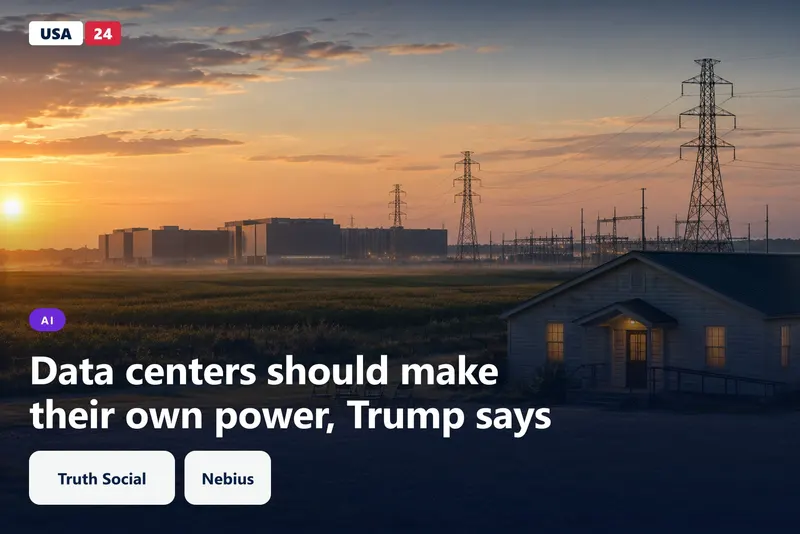
The Trump data center dividend idea started with a single social media post. On Wednesday, October 21, President Trump wrote on Truth Social that new and large data centers "are mandated by me" to generate their own electricity and to give or sell excess power back to the local community or the grid, according to The Hill. The post landed less than two weeks before the November 3 midterms.
He also urged technology companies to offer nearby residents a "dividend" to win local support for projects that have run into opposition over power and water demands, CNBC reported. The post closed with a demand to "MAKE DEALS, and get them built."
Trump framed the policy as protection for consumers. In his telling, households should not absorb the cost of powering the AI industry, and the plan could keep electricity prices from rising. He went further and said it might even lower them. Those are claims, and the reporting so far does not test them.
Whether the post has legal force
The most important fact for most readers is this: so far, the policy exists as a post, not a signed order. Tom's Hardware and the other outlets covering the announcement describe a social media statement. None of them cite an executive order, a federal rule or a statute that would make the "mandate" binding on developers, utilities or states.
That gap matters. A presidential statement can signal direction and pressure companies, but it cannot by itself set retail power rates or rewrite grid interconnection rules. Those decisions sit largely with state utility commissions and regional grid operators. A binding federal requirement would need a formal legal instrument, and the post does not supply one.
What happens if a developer ignores the post? The coverage does not say. Until a document spells out obligations and penalties, the "mandate" is best read as a policy goal with political weight.
Why data centers have become a midterm issue
Electricity bills, water use and local opposition have pushed data centers into the campaign. CNBC reports that public opposition has grown over environmental impact and power use, and that multiple states are considering data center moratoriums. Al Jazeera reports that polling shows weak public support for the facilities, and that Trump's approval rating has reportedly hit record lows.
The concern cuts across party lines. Al Jazeera describes the issue as one of rare bipartisan concern ahead of the midterms. Republican Senate candidates Ken Paxton in Texas, Mike Rogers in Michigan and John Husted in Ohio have called for more restrictions and oversight of data centers, reversing earlier positions.
Trump's own explanation for the shift is blunt. In the Truth Social post, he wrote: "I have watched the process closely, and Data Centers that were highly unpopular in a certain area, have become extremely popular when a financial deal is struck." His argument is that money, not zoning fights or speeches, can buy local acceptance.
The post also extends a long-running position. Newsweek reports that Trump has called AI and data centers the "Greatest Economic Development Engine in History." The new message keeps that enthusiasm and attaches conditions to it.
Will self-supplied power lower your bill?
Trump says the plan could prevent electricity price increases and might even lower prices. The mechanics are easy to picture. A large facility that generates its own power draws less from the shared grid, and any surplus it returns could add supply. Fox News's live coverage carried the same price argument, but none of the reporting cited here includes data or modeling showing how much, if at all, a monthly bill would move.
The unanswered part is who pays for the new generation and transmission that AI campuses require. That depends on contracts and rate rules, and the post does not address either one. Households should treat the price promise as a hypothesis to test, not a forecast.
What a Trump data center dividend could look like
The dividend is the least defined part of the plan. The sources do not say how large payments would be, who would qualify, how long they would last or how anyone would enforce them. Tom's Hardware says how the policy will work in practice "is yet to be seen."
Industry reaction has been cautiously open. Marc Boroditsky, chief revenue officer at Nebius, told CNBC, "It's not crazy" to consider such a concept, and said the company is "100% in principle" open to community investment. One executive's openness is not a commitment. It does suggest that at least some developers see community payments as a negotiating tool.
Utilities, governors and the expanded ratepayer pledge
Tom's Hardware reports that Trump expanded the administration's "ratepayer protection pledge" to include state governors and utility companies. That matters because utilities own the wires and send the bills, and governors shape the rules their regulators follow. The pledge now reaches the parties that would have to carry out much of the plan.
The White House says the pledge already had more than 300 participants. The WLT Report relayed that figure, but the count is truncated in the source text, so the full total is unclear. Coverage also does not say what participants must do or what happens if they fall short.
Investors are watching too. A recent AI stock selloff hit CoreWeave, Nvidia and Broadcom as the Nasdaq slid, and OpenAI is racing to close a $30 billion raise before Anthropic's IPO. Any rule that adds cost or conditions to building data centers would land on plans like these.
What residents should do now
The policy is not yet binding, so the practical work falls to residents and local officials. Start with these steps:
- Watch for local data center proposals and the public hearings where zoning, water and power agreements get decided.
- Ask your utility or state regulator whether it has adopted ratepayer protections for large electricity users, and read the terms.
- Before assuming a community dividend benefits you, look for written terms covering the amount, eligibility, duration and enforcement.
- Check whether your state is weighing a data center moratorium, and who is pushing for it.
These steps cost little and put you in the room for the decisions that actually set your bill.
What to watch next
Three things will show whether the post becomes policy. The first is a signed executive order, rule or other formal instrument that spells out obligations and penalties. The second is whether the Ratepayer Protection Pledge publishes its participant list and commitments. The third is how state regulators and governors respond, since they control most of the levers that touch bills.
The calendar raises the stakes. The midterms come about two weeks after the post, and candidates have every reason to promise community payments now, even if the terms take years to write. Voters should look for the paperwork behind the promise.