Why companies are opening memory chip war rooms
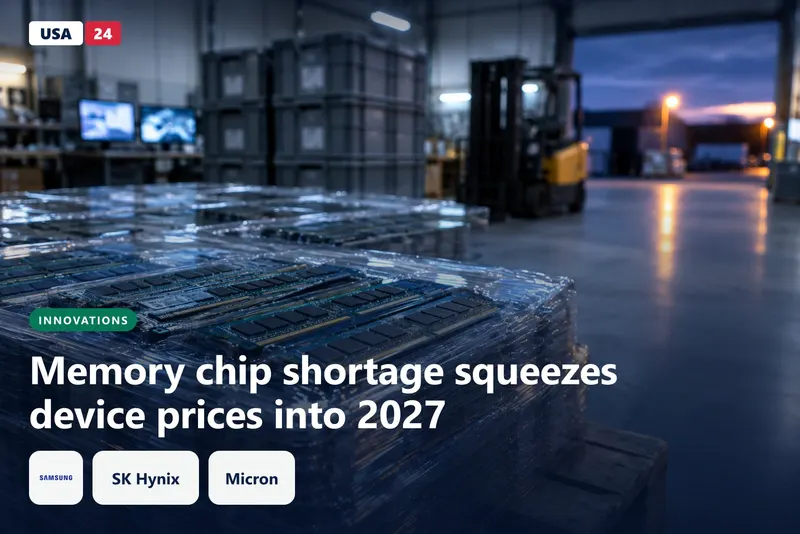
Staff at some electronics makers now spend their days on eBay, dialing independent brokers and buying memory chips in batches as small as five to 12 units. The Wall Street Journal reported on November 26 that this scramble is spreading worldwide as the memory chip shortage pushes some prices up about tenfold in a year. TheNextWeb's summary of the report lays out the newspaper's findings, including the buying tactics.
These procurement war rooms handle three jobs: tracking inventory on platforms such as eBay, negotiating with brokers, and prepaying large portions of contract value. Finexus reports prepayments of 25% to 30% of contract value to lock in future deliveries. That turns an ordinary purchase order into a financing decision, and it favors companies with cash on hand.
Cash has become part of the supply chain too. According to the WSJ report as summarized by TheNextWeb, Taiwanese memory module maker Apacer has taken out loans so it has cash ready whenever supply appears. That is a manufacturer betting its balance sheet on the next shipment.
AI Weekly reports that many clients of Seraph, a Las Vegas-based supply-chain consultancy, now spend six days a week in makeshift war rooms. They cold-call hundreds of independent brokers for loose inventory. The informal market carries risk as well. The WSJ reported that thieves took about $100,000 of flash memory from one company's warehouse in Indonesia.
How AI demand is draining standard memory supply
Memory makers have not simply run short of capacity. TheNextWeb reports that Samsung, SK Hynix and Micron are moving production to high-bandwidth memory, the chips used in AI systems. GazeWire explains the economics: high-bandwidth memory carries higher margins, which leaves standard DRAM tight.
AI Weekly puts the demand side in one number. Data centers are set to consume more than 70% of the high-end memory chips manufacturers produce in 2026. That leaves smaller buyers competing for whatever remains.
Policy is also tightening around AI hardware. A new US rule requiring licenses for overseas AI data center access is a separate story, and none of the memory coverage ties it to price moves.
How much memory prices have really risen
The tenfold figure gets the most attention, so it needs context. ExplainX, which checked the claim, says the roughly tenfold increase applies to certain chips and is not an average. Other sources cite smaller but still steep rises from IDC and TrendForce.
The clearest single example comes from Team Group. Technology.org reports that its cited contract price for a 16-gigabit DDR5 chip rose from $8.70 in October 2025 to $48 in September 2026, more than fivefold. The table below compares the main figures in the coverage.
| Measure | Reported figure | Source |
|---|---|---|
| Some memory chip prices, per the WSJ | About 10x in a year | TheNextWeb, ExplainX |
| Team Group, 16Gb DDR5 contract price | $8.70 (October 2025) to $48 (September 2026) | Technology.org |
| PC builders' memory costs | Roughly 500%, per secondary coverage | Technology.org, GazeWire |
| Framework high-end desktops | Up about 70% | AI Weekly |
The 500 percent figure conflicts with both the tenfold and the fivefold examples. Treat any single percentage as specific to a product and sales channel, not as a market-wide average.
Technology.org also quotes an unnamed supplier CEO, whose company the article does not name, saying DRAM supply to module makers could fall more than 70% year over year in 2027. The same article quotes IDC, a market research firm, calling the shortage "a crisis like no other."
Who pays first: laptop, phone and console buyers
Consumers will feel this first, through higher sticker prices and changed configurations. Framework Computers said memory suppliers pulled out of agreements, forcing it to cut memory in preordered PCs. Prices of some of its high-end desktops are up about 70%, according to AI Weekly. When a supplier backs out, the buyer may receive a machine with less memory than the one ordered.
Device makers are absorbing pressure too. According to TheNextWeb's summary of the WSJ report, memory costs have hit Xiaomi's quarterly profit and Apple's margins. Margins can only absorb so much before prices rise or specs shrink.
Winners, losers and the small-buyer squeeze
Samsung, SK Hynix and Micron are the central beneficiaries of the price spike, because they make the chips being fought over. Device makers, especially those without large supply contracts, face margin pressure with few easy options. Particle reports that smaller electronics makers are hit hardest, while large cloud and AI customers pursue long-term deals and direct supplier talks.
That gap matters. Large buyers can sign multi-year agreements and talk directly with suppliers. Smaller firms are left with brokers, prepayments and spot purchases, which is where war rooms do most of their work.
This shortage also differs from the last one. Wikipedia's overview of chip shortages says the 2020 to 2023 pandemic-era shortage came mainly from supply-chain disruption. This one is driven by AI demand absorbing production capacity. A logistics fix can restart stalled lines, but it does not build new factories. None of the sources describes a planned US government response to the shortage.
What the memory chip shortage means for holiday buyers
- Price-check the exact configuration you want now, including memory and storage tiers, rather than waiting for a usual holiday discount.
- Buy from retailers that show confirmed stock. The reporting describes spot buying through brokers and eBay, and the theft case shows how much physical product moves through informal channels. Check seller reputation and return policies before paying.
- If a model offers several memory options, compare the price gap between tiers before choosing.
- If you plan to upgrade a laptop later, check whether its memory is soldered to the board, because soldered memory cannot be added later.
- Businesses should plan purchases earlier than usual, expect prepayment requests of 25% to 30% of contract value, and budget for longer lead times.
When the memory chip shortage could ease
Forecasts diverge. Team Group expects the shortage to worsen next year. Manufacturers point to new factories coming online in 2028, and both AI Weekly and Finexus say the shortage is expected to persist until then.
Watch three signals in the coming months. Watch whether contract prices keep climbing, whether DRAM supply to module makers falls as sharply as the unnamed supplier CEO warned, and whether high-bandwidth memory keeps pulling capacity away from standard parts. If those signals keep pointing up, device prices will stay elevated well into 2027, and buyers should plan for that.