What the DOJ anti-scam crackdown covers
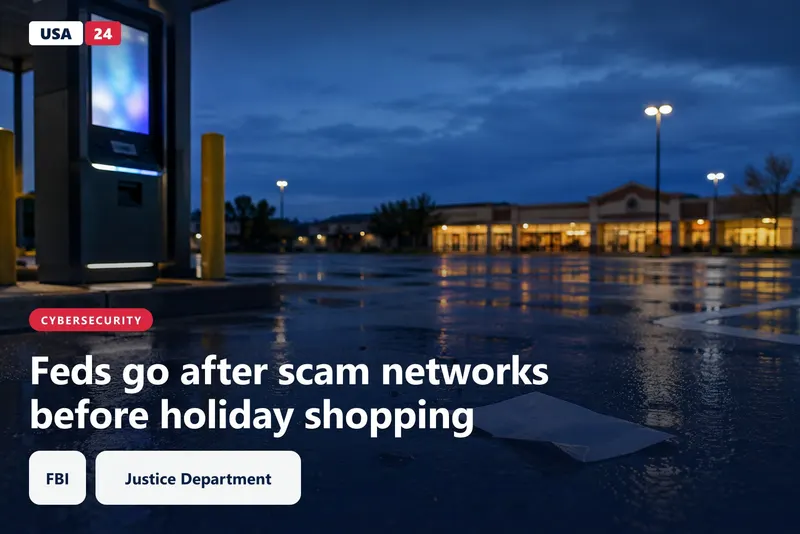
The DOJ anti-scam crackdown announced on Tuesday, November 24, 2026, has charged more than 800 defendants in a nationwide and international push against scam networks. Officials also cited about $8 billion in victim losses, a figure that outlets describe in different ways. The announcement landed two days before Thanksgiving, when shopping and delivery scams spike.
The effort traces to President Trump's Executive Order 14390, according to a Fox 23 report. Attorney General Todd Blanche and FBI Director Kash Patel spoke at the press conference. Blanche called it "the largest anti-scam enforcement surge in history," according to The Washington Times.
The targets, according to a reproduction of the Justice Department's release, include criminal networks running fraudulent calls, cryptocurrency investment schemes, government impersonation and other fraud. The same reproduction says more than 30 defendants were charged or had charges unsealed in the month before the announcement. USA 24 did not locate a primary DOJ release or FBI transcript at publication, so the details here come from news reports and that reproduction.
For consumers, the most relevant part is the range of tactics. Phone scams, crypto investment fraud and impersonation schemes reach people who answer unexpected calls, and older Americans are a frequent target. Fox News framed the headline results as a recovery story, which makes the dollar figures the first thing many readers will remember.
Timing is part of the story. The results arrived as many Americans were planning Thanksgiving travel, gift purchases and package deliveries, the period when the FBI's Boston office says scam activity rises.
Why the numbers do not yet agree
The coverage contains several figures that do not line up:
- Fox News reported that the Justice Department recovered $8 billion and charged more than 800 suspects.
- Patel told reporters the FBI had seized nearly $17 billion in illicit funds, as reported by The Washington Times.
- The Justice Department said prosecutors brought more than 400 cases against more than 800 defendants in the eight months since the order.
These figures may measure different things, such as recovered money, restrained assets or intended losses. The reports also do not make clear whether the totals cover only the eight months since the order. Nothing in the coverage explains how much of the seized money will return to victims, or when.
Some figures rest on weaker footing. The claims that Americans were warned directly more than 11,000 times and that more than $690 million in potential losses was prevented appear only in the Ashland County reproduction, and USA 24 could not match them to an official DOJ page. Treat them as unverified until the department publishes its own release.
Even with those gaps, the direction is clear enough to act on. The emphasis on cryptocurrency and money laundering suggests that payment processors, crypto platforms and banks could see tighter monitoring and more law-enforcement requests. Those firms may feel the first operational change well before individual scammers do.
How the crackdown targets overseas scam compounds
The most striking element is the attention to scam compounds abroad. The FBI's Operation Blackout targets these overseas operations, which the reports describe as often staffed by trafficking victims forced to run call-center scams. Patel said the bureau had freed more than 2,200 trafficking victims.
Patel also said the FBI had "leveled" 29 scam compounds. RedState reported his remarks as posted on the FBI Director's account, including the phrase "literally leveled 29 scam compounds on four separate continents." That wording has not been checked against a DOJ transcript, so the exact phrasing should be treated as provisional.
The compound raids raise a practical question. Destroying a facility removes infrastructure, but the reports do not say how many workers were prosecuted, deported or returned home. Future updates should show whether the work moves elsewhere or stops. Blanche's claim that this is the largest effort in history is also one the reports attribute to him and do not independently test.
The jury-duty and fake warrant schemes officials highlighted
One case singled out at the press conference involved a jury-duty impersonation scam allegedly run from prison. Local12 tied it to a nine-count indictment returned last week in the Northern District of Texas. These calls usually tell the target they missed jury duty and must pay to avoid arrest, which plays on the kind of fear that drives fast payments.
Separately, the U.S. Postal Inspection Service seized three internet domains tied to jury-duty impersonation schemes and redirected visitors to seizure notices. That step shows how agencies can cut off a scam's web presence, though it does not stop someone who has already received a call.
Prosecutors also displayed a bogus FBI arrest warrant that demanded payment at a Bitcoin kiosk. Along with it came a document described as a "mobile escort order," which told targets to stay on the line. The combination is a familiar script: an official-looking threat, a demand for hard-to-reverse payment and an instruction to keep the victim isolated.
How to protect yourself from holiday scams
The FBI's Boston office warned on November 24 that scammers are using advanced AI tools to mimic legitimate retailers and delivery services. The FBI Boston advisory frames the season as high risk for shopping, travel, package deliveries and charity fraud. Local TV coverage, as reported by KTUL, cited Gallup's finding that about one in ten U.S. adults had a scam experience last year, either directly or through someone in their household.
Use these steps now:
- Hang up on unexpected calls that claim to come from the FBI, a court or the IRS. Call back using a number you look up yourself, not one the caller provides.
- Never pay a fine, bond or warrant through a Bitcoin ATM or gift cards. Federal agencies do not collect payments that way.
- Check delivery and retailer messages in the company's app or on its official website before tapping a link or paying a fee.
- Report fraud to the FBI's Internet Crime Complaint Center at ic3.gov and to the FTC at reportfraud.ftc.gov. If money has moved, contact your bank immediately, since fast reporting helps recovery.
- Talk with older relatives about these tactics before the holidays, since they are frequently targeted.
What to watch next
Three things will show whether this surge changes outcomes or only headlines. The first is a primary Justice Department release and transcript that settle the dollar figures, the case counts and the Operation Blackout numbers. The second is a timeline for returning seized money to victims, which none of the reports provide. The third is whether the cases against compound operators and jury-duty schemers hold up, and whether banks and crypto platforms report new monitoring demands.
For now, the safest rule is the simplest one. Anyone who demands payment during an unexpected call, text or visit should be treated as a scammer until you verify the claim through a number you found yourself.